Competition handball balls


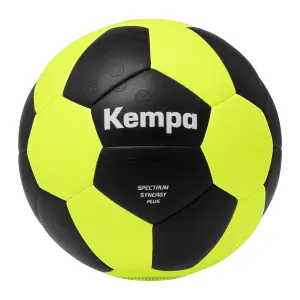


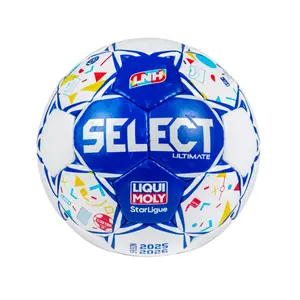


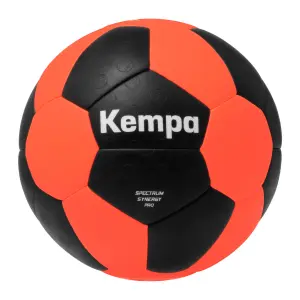


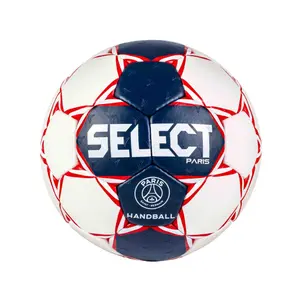


A circumference of 58 to 60 cm and a weight of 425 to 475 g in size 3: a competition handball meets the dimensions of the international regulations, and it is in the touch, flight stability and grip that it stands out.
Match balls hand-stitched, models approved by the EHF or sanctioned for play without resin: this page brings together the balls designed for match day, in sizes 1, 2, and 3.
What makes a match ball
A competition ball has a thinner and more refined cover than a training ball. It sticks better to the fingers, flies straighter, and keeps its round shape despite the shots. Many are hand-stitched, with a bladder that maintains its shape and a foam lining that softens the catch. The downside is that it wears out faster if used in every training session.
EHF approved, IHF certified: read the mentions
Some balls carry a federation mention. The HB Force DB from Select is approved by the EHF, and the D60 Pro from Molten is certified by the IHF for resin-free play. These mentions indicate that the ball meets the federation's competition criteria. For an official match, however, it's the rules of your competition that determine which ball is used.
Ultimate, Spectrum Synergy Pro, Star Match: the weekend balls
The Ultimate from Select, in the colours of the Champions League or the LNH, opens the page. The Spectrum Synergy Pro from Kempa, in grey and red, grey and blue, or red and black, is aimed at high-level competition. Hummel offers the Evolution Pro, the Star Match, and the Star Pro, while Erima has the Flash Elite. Molten rounds it off with the D60 Pro and the FFHB HX5001 and HA5000 balls, and Puma with the Nova Pro.
With or without resin on match day
Most competition balls are played with resin, which provides grip for experienced players. If your hall prohibits it, look for a match ball designed for resin-free play, like the D60 Pro or the Evolution AR from Hummel. The page for resin-free balls groups them together.
A match size for each category
In competition, the size is determined by the category. Size 3 for men from 16 years, size 2 for women from 14 years and boys from 12 to 16 years, and size 1 for girls from 8 to 14 years and boys from 8 to 12 years. A match ball in the wrong size is useless on match day.
Select, Erima, Kempa, Hummel, Molten: the match balls from the big brands
- Select provides the Ultimate of the EHF Champions League and the HB Force, approved by the EHF.
- Erima reserves the Flash Elite, the top of the Flash range, for matches.
- Kempa places the Spectrum Synergy Pro at the top of its range.
- Hummel offers the Evolution Pro and the Star range.
- Molten, supplier of the official IHF ball, features the D60 Pro and the FFHB balls.
Training and recreational balls
A match ball needs to be taken care of. During the week, go for the training balls, which are more durable. For family play, the recreational balls are softer, and the beach handball balls take over on the sand.
Discounted match balls
Current discounts can be found in the special offers on balls. At the end of autumn, check out the Black Friday balls, then the ball sales.
Frequently asked questions
How many match balls for a team?
Two or three match balls are enough for the match and the warm-up of the goalkeepers. The rest of the sessions can be done with training balls, to save those for the weekend.
Does a match ball need breaking in?
A new ball often feels a bit slick. A few warm-up sessions are enough to roughen up the cover and find the right grip before using it in a match.
Who provides the ball in an official match?
As a rule, the home team provides the match balls, in accordance with the competition rules. Check with your club or committee for details.
Can a match ball be used outdoors?
It's not recommended: a rough surface wears out its thin cover quickly. Save it for indoors and use a training ball for outdoor play.
How to care for a competition ball?
Clean the resin after each match, keep it inflated to the recommended pressure, and store it in a bag, protected from heat. An underinflated ball will deform.