Handball socks


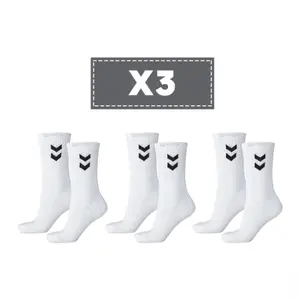


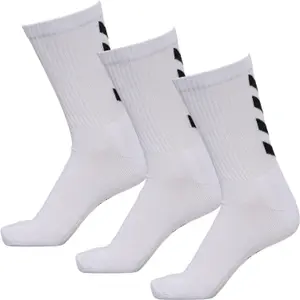


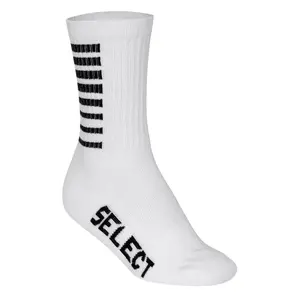


Same colour for the whole team: that's the first thing the IHF regulations require for handball socks, so your choice starts with the club's colours.
Next come the height, thickness under the foot and grip. Low for training, high for matches, in pairs or in packs: it's up to you to decide.
Socks: ankle, mid-calf or high – what height for handball
The height affects usage. Ankle socks and low socks leave the ankle free, ideal for training and physical preparation. Mid-calf socks protect the Achilles tendon from shoe friction. High socks go up under the knee and give the most uniform look to a team. For matches, the IHF regulations only specify the colour, which must be the same for the whole team: the height is decided with the club.
Non-slip or compression socks: two distinct types
A non-slip sock has silicone dots or grippy areas on the sole. It limits foot slipping in the shoe during direction changes and landings: Errea with its Energy Gripp or Craft with its non-slip Progress are examples. Compression socks tighten around the calf to support it during effort or recovery. The page features some models, including socks designed for after the match.
Under the handball sock: loop, reinforcements, and arch support
What goes unseen is just as important as colour. A looped sole cushions repeated impacts. Reinforcements at the heel and toes delay wear in areas where the shoe rubs. A tighter band around the arch keeps the sock in place during feints. Synthetic fibers, often blended with cotton and elastane, wick moisture better than pure cotton.
Hummel, Select, Mizuno, Kempa, Erima, Errea: leading sock brands
- The Hummel Hummel socks come in a low version and a Grip version in the Pro line, as well as Basic packs of three pairs.
- The Select Select socks, from the Danish ball brand, focus on solid or bi-colour Basic models, sold individually or in club packs.
- The Mizuno Mizuno socks are mostly sold in packs, featuring the Team Japan and Team Trad ranges in team colours.
- The Kempa Kempa socks, from a brand dedicated to handball, offer the Logo Classic in low or high versions.
- The Erima Erima socks feature the Tanaro, available in many club colours, as well as ankle socks in packs.
- The Errea Errea socks combine the bi-colour Zone in one size and the non-slip Energy Gripp.
Craft, adidas, Puma and other brand-specific sock pages
- The Craft Craft socks page brings together the Squad Solid solid socks and Progress Indoor, made for indoor play.
- The adidas adidas socks page focuses on the Adi model in club colours and the footless Team Sleeve.
- The Puma Puma socks page offers the teamGOAL in adult and child sizes, with or without foot.
- Does your club play in Macron? The matching socks are on the Macron Macron socks page.
- The same applies for clubs equipped by Joma, with the Joma Joma socks page.
- And for a Kappa outfit, the Kappa Kappa socks page completes the list.
Bulk socks and low prices for the whole team
A team quickly wears out its socks. Packs of several pairs reduce the cost per pair and ensure the same colour for the whole group, which is important for matches. To go further, the special textile offers page and the textile clearance page gather opportunities, from replacement pairs to complete restocks in a category.
Frequently asked questions
What sock size should I choose for handball?
Socks come in size ranges, such as 39-42 or 43-46. If you are between sizes, the smaller one fits better and creates fewer creases in the shoe. Some models are available in one size, with elastic knitting that adapts to the foot.
Are non-slip socks allowed in matches?
The IHF regulation requires socks to be the same colour for all players on a team. Thus, a non-slip sock in the club's colours is acceptable. If in doubt, ask your club before the competition.
Can I wear compression sleeves in matches?
Yes, provided they are the same colour as the socks. The IHF regulation applies the same requirement to ankle supports and strapping. So, make sure your sleeves match the club's sock colour.
How can I prevent blisters in handball?
A sock that fits properly, without creases, is crucial. Opt for a synthetic material that wicks moisture, with reinforcements at the heel and toes. Change pairs between matches in the same tournament: a damp foot gets damaged faster.
How many pairs should I have for a year of handball?
Count at least one pair for each training session in a week, plus one for the match, so you never play with damp socks. A pack of identical pairs makes laundry easier. Keep match socks, in the club's colours, separate.