Bandages and strapping for sport




Before applying a strap, make sure to dry the skin and shave the area if needed: the bandages stick better and come off without tearing. On this page, you'll find what you need to support an ankle, wrist, or turned finger, from rigid to elastic and cohesive bands.
Dressings and wrist bands complete the bag of the caregiver. For an injury, always seek the advice of a healthcare professional before resuming.
Rigid strapping, elastic band, cohesive band: each bandage has its role
Three categories share the page. Rigid strapping, made of non-stretch fabric, limits movement: it's the one used in a stirrup on an ankle or in rings on a finger. The adhesive elastic band, often called elastomer, supports the motion while providing assistance, and is also used to secure a first strap. The cohesive band sticks to itself and not to the skin: it is quick to apply, painless to remove, and can sometimes be reused on a plaster or ice pack.
Fingers, wrists, ankles: the areas to protect in handball
Handball mainly stresses the hands and points of support. Goalkeepers and backs often strap their fingers, which are exposed to contact with the ball and opposing arms. Wingers and pivots, who land after a jump shot or contact, tend to protect their ankles instead. The wrist bears the brunt of falls and repeated impacts: a terry cloth wrist strap also absorbs sweat before it reaches the hand.
Choosing the width and length of a roll
The width depends on the area. A narrow roll is suitable for fingers and thumbs, while a wider roll is for ankles, knees, and wrists. Regarding length, elastomer bands come in various sizes: a short roll is handy in a player's bag, while a long one is useful for the team physio who straps multiple players before each match. Keep a spare roll too, as a strap rarely goes on perfectly the first time.
Sporti, Select, McDavid: the bandage brands
- Sporti holds the essentials of the page with its elastomer bands in various lengths, its sport tape, and its elastic cohesive band, in blue, orange, or black.
- Select, known by handball players for its balls, complements with care products designed for the bench.
- McDavid, a specialist in protective gear, adds its support solutions.
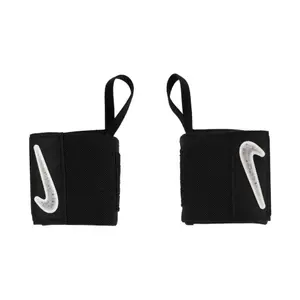
- Nike offers Alpha wrist bands in black and white.
- Kaatsu presents training bands to place on the upper arms or thighs: these are not strapping bands, as they are used in a structured training context.
Restocking the club's straps at lower cost
Bands run out quickly during a club season. The special equipment offers are the first place to check, and the good deals page gathers all the discounts on the site. During sales, also check the equipment sales.
Frequently asked questions
Should you apply an underwrap before a strap?
It's not mandatory, but an underwrap protects sensitive skin and prevents hair from being pulled when removing it. The strap holds a bit less firmly because it sticks to the underwrap and not directly to the skin. For a tight hold, apply it directly on clean, dry skin.
How long should a strap remain on an ankle?
A support strap is applied for the session or match, then removed. Keeping it on for hours irritates the skin and the support decreases as the band loosens with sweat. If discomfort persists after exertion, consult a healthcare professional.
How to strap a turned finger in hand?
The most common method is to immobilise the injured finger with its neighbour by placing two narrow strips of strap on either side of the joint. Leave the joints free to maintain grip. A swollen or painful finger should be checked by a doctor before being strapped for play.
Can a cohesive band replace a strap?
Not really. It supports and holds a dressing, but it stretches and does not restrict movement like a rigid strap does. It is useful for light support or for securing an ice pack.
How to tell if a strap is too tight?
A strap that is too tight hinders circulation: tingling, cold or numb fingers, and skin turning blue. In this case, cut it or remove it immediately with round-tipped scissors. A strap that is too loose, on the other hand, holds nothing, which is why it's best to have the first one applied by a physiotherapist or a sports doctor.