Handball referee: whistles and cards


Two referees on the pitch and three cards in the pocket, yellow, red and blue: the equipment of a handball referee is minimal, but every piece matters when the game heats up.
Classic, electronic or hand whistles, cards, complete sets and lanyards: all the gear needed to officiate a match, from youth games to championships.
Ball or no ball whistle
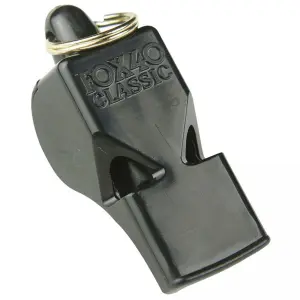
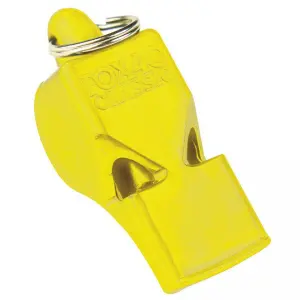
The classic referee whistle is a ball-free whistle, like the Fox 40 Classic offered by Erima in various colors or the classic referee whistle from Select. Its sound doesn't depend on any small moving part: nothing can get stuck, and it sounds the same on the first blow as it does on the last. Select describes it as powerful and immediate, whether indoors or outdoors. The page also offers whistles with a mouthpiece or lanyard, and plastic whistles sold in bulk for referee training schools.
Electronic whistle and hand whistle: hygiene first
The electronic whistle from Digi Sport Instruments is activated by a press, without needing to be put in the mouth. It emits a single tone, includes an LED light, and runs on supplied button batteries. The hand whistle from Sporti follows the same logic: you press it in your palm for a loud, shrill sound, and it can be passed from hand to hand without worrying about hygiene. Two practical options for a coach who runs several sessions.
Yellow, red, blue: the cards and the set for refereeing
In handball, yellow is for warning, red is for disqualification, and blue, shown alongside red for a serious foul, indicates that referees are writing a report. The set of handball refereeing cards from Sporti includes all three cards, a card pad, and a pencil. The Sporti cards are also available individually, in yellow, red, white, and blue.
Lanyards and finger supports
A lanyard keeps the whistle around your neck for easy access: Erima offers a short and a long one, depending on your height and how you whistle. The magnetic finger support from Sporti holds the Fox whistle at your fingertips, ready to use, without anything around your neck.
The scorekeeper for matches without a scoreboard
For a youth tournament or an informal match without a display board, the foldable scorekeeper from Sporti shows both scores, the period, and the direction of play. It packs flat into a bag of equipment.
Sporti, Erima, Select: who equips the referee
- Sporti: handball refereeing set, individual cards, hand whistles, Fox whistles and accessories, scorekeeper.
- Erima: the classic Fox 40 whistle in several colors and lanyards.
- Select: a ball-free referee whistle, reserved for referees according to the Danish brand.
- Stanno: the Dutch collective sports brand completes the offer.
- Digi Sport Instruments: the electronic hand whistle.
Refereeing youth matches
Many clubs train their youth referees, often in pairs like adults. A first kit consists of a ball-free whistle with lanyard and a set of cards. The electronic whistle is very handy for a beginner who isn't yet confident enough to blow loudly.
The rest of the referee's bag
A water bottle for half-time, a watch to keep track of the game time on your side, and a pump with a needle to check the ball before kick-off complete the equipment. All the small items are on the accessories page, and there are discounts on special equipment offers.
Frequently asked questions
What whistle is best for indoor refereeing?
A ball-free whistle with a powerful sound is a solid choice in a gym, where the resonance covers voices. Get two: one around your neck, one spare in your pocket.
Does the blue card result in a suspension?
The blue card accompanies a red card: it means that the referees are attaching a written report to the match sheet. The follow-up, whether a suspension or not, is then up to the disciplinary committee, not the referees on the field.
How do you clean a whistle?
Rinse it with warm, soapy water after each match, shake it to remove the water, and then let it air dry. One whistle per person remains the rule for hygiene.
Is a special outfit required for refereeing?
In official competitions, the outfit of referees is set by the federation or league: check with your committee. For a youth match at the club, a plain top in a color different from both teams is often enough.
Why two referees in handball?
The game is fast and takes place across the width of the field. One field referee follows the action, one goal line referee monitors the goal area, and both switch roles throughout the match.