Junior handball socks


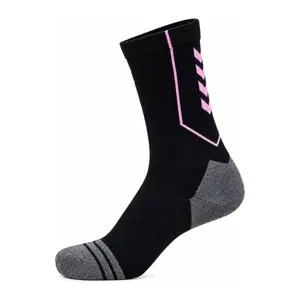
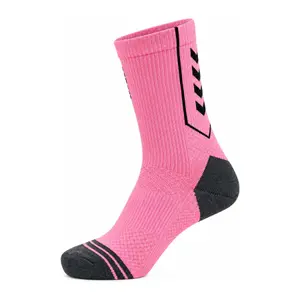


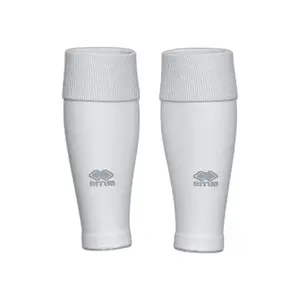


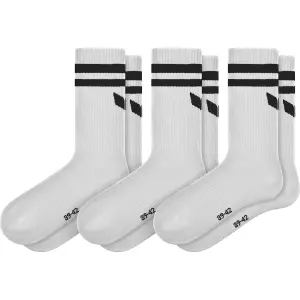


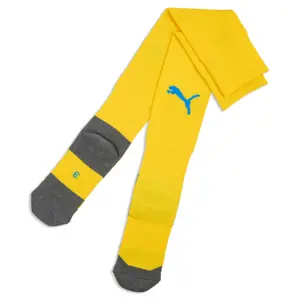


To choose junior handball socks, start with the child's shoe size rather than their age: socks that are too large create folds in the shoe, and these folds lead to blisters after just two sessions.
High socks in club colours for the match, low ones for training or school sports: the page brings together both lengths, in single pairs or packs to last the whole week.
High, mid-high or low: three lengths for three uses
The high sock goes up to just below the knee. It’s the match sock in many clubs: it extends the colours of the shorts and protects the lower leg when the child slides on the ground. The mid-high stops at the calf, covers the ankle, and keeps you cooler. The low sock, cut below the ankle bone, hides in the shoe for training sessions, summer camps, or physical education. For a first year of playing, one pair of high socks for matches and two or three pairs of low socks for training are enough.
Check the size ranges on the label
Socks are not sized in centimeters like jerseys, but by size ranges. A child who is at the upper limit of a range will quickly feel cramped: go for the next size range instead; the sock will just be a bit longer at first. Make them also try the match sock with their indoor shoes: a thick sock should not squeeze the toes once the laces are tight.
Heel, toe, ribbed cuff: what keeps a sock in place
A sports sock is recognised by its reinforced areas. The heel and toe, which wear the most, are often strengthened. A ribbed cuff keeps the high sock in place without squeezing the calf. Some pairs have a thicker knit under the foot, which cushions landings from jumps. Also, look at the material: a blend of cotton and synthetic fibres stays soft while drying faster than pure cotton.
Hummel, Kempa, Erima, Puma, adidas: socks for young players
- Hummel: the Blaze Pro socks, available in high or low training versions, and the Essential, easy to match with any outfit.
- Kempa: high, bicoloured socks in bright colours that are found on club kits.
- Erima: training pairs often sold in packs, convenient for switching between sessions.
- Puma: the teamGOAL socks, available in a long list of team colours.
- adidas: ankle socks and high children’s socks, marked with the three stripes.
Blenisters and wet feet: avoid them from the first sessions
A child coming home from training with a blister often isn’t to blame: it’s the sock that slipped in the shoe. Three habits help limit this risk. A clean, dry pair for each session, never the one from the day before. A sock without a thick seam at the toe. A sock pulled flat before lacing up, with no fold under the heel. If the blister keeps returning in the same spot, it might be worth reviewing the shoe size.
From head to toe: complete the young player’s kit
- The high sock extends the shorts: junior handball shorts are often chosen in the same colour.
- The top of the match kit can be found among the junior jerseys.
- In winter, children’s baselayers keep arms and legs warm under the kit.
- Junior t-shirts and polos are used for training and camps.
- Between tournament matches, a junior sweat helps avoid getting cold.
- Children’s jackets and tracksuits dress the club’s travels.
- The young goalkeeper will find a protective pair of trousers among the junior trousers.
Children's socks on sale
Socks wear out quickly and get lost even faster in the changing rooms. To buy more without spending too much, take a look at the junior clearance page, then at the junior sales when they start. For the rest of the year, special textile offers also bring together pairs at reduced prices.
Frequently asked questions
Can football socks be used for handball?
Yes, many pairs from the page come from football and work very well indoors. The models designed to cover shin pads are simply longer and sometimes thicker. For training, a low or mid-high pair is generally more comfortable.
How many pairs should I plan for a child training twice a week?
Count on one pair per session and one for the match, which means three or four pairs to rotate between two washes. The packs are made for this. Add a spare pair in the bag for tournaments in a single day.
How can I keep white socks really white?
Wash them inside out, separate from dark colours, and avoid bleach that yellows synthetic fibres. Soaking them in warm water with a bit of detergent before washing helps lift dust from the floor.
My child sweats a lot from their feet: what should I choose?
Choose a pair rich in synthetic fibres, which repels moisture better than pure cotton. Change socks between matches in the same tournament and let the shoes dry, with the soles removed, between sessions.
Does the club impose the colour of the socks?
Often for matches, rarely for training. Clubs that provide shorts usually require high socks in a specific colour. Check with the coach before buying, especially for a first licence.