Junior handball jerseys


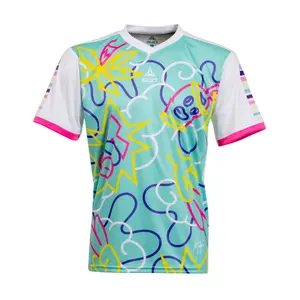


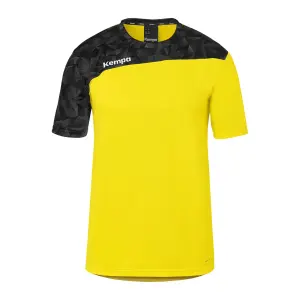


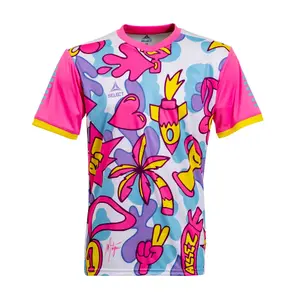
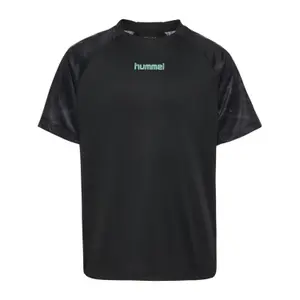
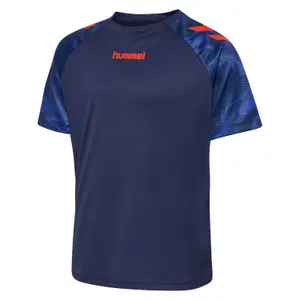

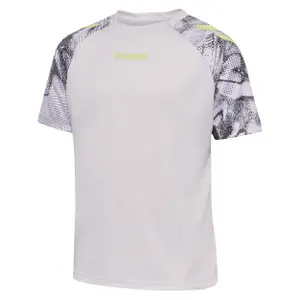
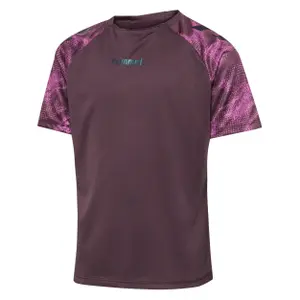


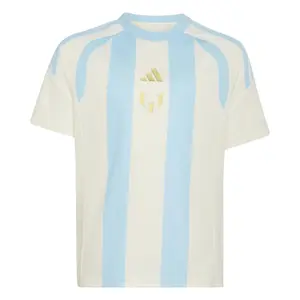
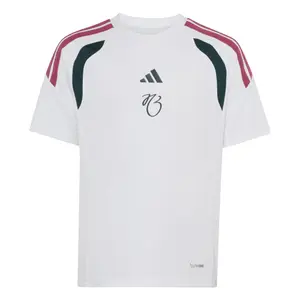


At the time of the first license, the junior handball shirt often arrives with a number on the back, but you quickly need more: for training sessions, camps during the holidays, or to cheer on the Blues in front of the TV.
Training shirts, team kits, goalkeeper shirts, and supporter versions are available here in children's sizes, measured in centimeters.
Match shirt, training shirt: two uses for a child
The match shirt is often provided by the club, featuring its colours and number. The training shirt, on the other hand, is the responsibility of families. It doesn't need to match: it mainly needs to dry quickly, withstand repeated washes, and allow free movement for the arms. A lightweight polyester, breathable mesh under the arms, and a fit that is neither too long nor too baggy will do the trick. Make sure to have two so you can alternate between sessions.
Number, colours, goalkeeper: what a match sheet requires
The IHF rules require a uniform kit for all players on the team's field, with numbers from 1 to 99 that are clearly distinct from the shirt colour. The goalkeeper wears a colour that sets them apart from the outfield players of both teams. For youth players, it's often the club that handles these matters with its set of shirts. However, if your child plays as a goalkeeper, do consider a goalkeeper shirt for training: the page offers options like the Prediction from Uhlsport, with long sleeves and sometimes sold with matching leggings.
Sizes in centimetres: a shirt that keeps up with growth
Child sizes correspond to height: a size 128 fits a child about 1.28 m tall, and a size 152 fits a child around 1.52 m tall. In terms of age, this roughly translates to eight years for size 128, ten years for size 140, and twelve years for size 152. A handball shirt should fit snugly without being tight: if it covers the bottom and allows for free shoulders, it's the right size. Going one size up to last two seasons may be reasonable for a supporter shirt, much less so for a playing shirt that floats and gets caught in duels.
The Blues and clubs in supporter version for young fans
The page also brings together supporter shirts in child sizes. The home shirt of the French team, made by adidas, is part of this selection. There are also club shirts, like those from Saint-Raphaël or Dunkirk, and textiles in the colours of the LNH. These supporter versions reflect the colours and design of the kits worn on the pitch, in a fit designed for everyday use.
Hummel, Kempa, adidas, Select, Erima, Puma: who dresses youth teams
- Hummel: the children’s shirts hmlCORE XK, a team base available in numerous colours, and the training shirt Blaze Pro.
- Kempa: the German handball brand, available with its fitted team shirts.
- adidas: the children’s shirt of the French team, for young supporters, and goalkeeper shirts from the Tiro range.
- Select: the Danish ball brand also offers children’s shirts, like the Graffiti model.
- Erima: club shirts and the Six Wings range, popular for outfitting an entire category.
- Puma: the teamLIGA shirts, with subtle finishes and a variety of team colours.
Shorts, socks, jacket: completing the child's outfit
- The bottom of the match outfit comes from the junior handball shorts, often from the same brand as the shirt.
- The junior socks complete the club colours.
- For winter, a base layer selected from the junior baselayers slips under the shirt.
- For more relaxed sessions, children's t-shirts and polos can replace the shirt.
- Before the match, junior hoodies keep the muscles warm.
- The junior jackets and tracksuits are for travel.
- The goalkeeper completes their outfit with one of the junior padded pants.
All the children's outfit can be found on the junior textile page.
Cheaper children's shirts depending on the time of year
A child changes size almost every year, and so do their shirts. End-of-line children's items are grouped on the junior clearance page. The Black Friday junior, followed by the junior sales, are the two other times to look out for training and supporter shirts.
Frequently asked questions
What size shirt for a 10-year-old child?
Size 140 generally corresponds to a child of about ten years old and around 1.40 m tall. However, rely more on their height than their age: a taller ten-year-old may already fit into a 152. If you're unsure between two sizes, choose the larger one for a supporter shirt, and the smaller one for a playing shirt.
Can a football shirt be used for handball?
For training, yes: the material and cut are similar, which is why the page offers them. In a match, only the team shirt counts, with its number. Just avoid shirts with very long or too loose sleeves, as they can get caught in duels.
Can a child's shirt have a name and number printed on it?
Printing holds well on smooth polyester shirts, much less so on highly breathable mesh. For a club shirt, first check with the club: the number is often allocated for the entire season and applied by the team supplier.
Can a supporter shirt for the Blues be worn for playing?
It can be used for training, but its fit is designed more for everyday wear than for intense play. For playing, a technical training shirt breathes better and is cheaper to replace. Save the supporter version for matches watched in the stands or at home.
Does a young goalkeeper need a different shirt from the others?
In a match, yes: the goalkeeper wears a colour that distinguishes them from the outfield players of both teams and the opposing goalkeeper, and the club often provides this shirt. For training, any shirt will do.