Junior Baselayers for Handball


Cold arms during warm-up, chafing thighs under shorts: what are junior baselayers for when you're ten years old and have two training sessions a week in a gym that's not always heated?
Long-sleeve base layers, leggings, shorts and technical vests fit snugly under the club kit. Choose them in the child's actual size: a base layer should follow every movement without restricting breathing.
Base layer, leggings, shorts: the child’s first layer
A baselayer is the clothing worn directly on the skin, under the shirt or shorts. For young ones, it comes in four forms. The long-sleeved base layer keeps the arms warm during warm-up and breaks. The leggings cover the leg up to the ankle, useful in winter in cool halls. The shorts, shorter, stop above the knee and reduce chafing between the thighs. The technical tank top, finally, is worn alone during physical preparation or under a loose shirt. All these pieces are made of synthetic fibers that wick away sweat rather than holding it, like an old cotton t-shirt would.
Growing in fitted clothing
A first layer that is too small compresses, while one that is too big bunches and rubs. At Hummel, as with most team textile brands, children's sizes are noted in centimeters of height: 116, 128, 140, 152, and 164, which roughly correspond to six, eight, ten, twelve, and fourteen years old. However, it’s the child’s actual size that matters, not their age. Measure them standing, barefoot, against a wall, and take the size equal to or just above that measurement. There’s no need to anticipate two years of growth: a base layer that floats no longer serves its purpose and rides up with every raised arm.
Compression for children: what to expect
Some leggings and shorts on this page are described as compression wear. For a child, their main benefits are support and comfort: the fabric doesn’t move, doesn’t ride up, and doesn’t rub during runs. They do not replace warming up or the preventive work done by the coach. If your child finds the clothing too tight after a few minutes, switch to the next size up rather than making them keep something that bothers them.
Kempa, Uhlsport, Erima, Hummel, Jako: children’s base layers by brand
- Kempa: the German brand, almost entirely focused on handball, offers the long-sleeved base layer Attitude, a simple base to slip under the match shirt.
- Uhlsport: the Distinction range includes long-sleeved base layers in a wide variety of colors, complemented by the Distinction legging Pro.
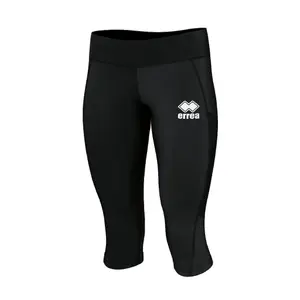
- Erima: the Racing legging and tank top, and compression shorts for the most intense sessions.
- Hummel: leggings and shorts for kids, notably in the hmlCORE range, easy to pair with the Danish brand's outfits.
- Jako: lightweight sports tank tops, designed for running, practical for physical sessions.
Matching the base layer to club colors
A base layer is visible at the ends of the sleeves, while leggings are worn under the shorts. Many clubs require a solid color, matching the shirt or shorts, for the team to remain uniform on the field. Before buying, ask the coach for the expected color: it’s often black, white, or the club’s main color. Ranges available in various shades, like Distinction from Uhlsport, make this choice easier.
What to wear on top: the rest of the junior outfit
- The base layer disappears under one of the junior handball shirts, from training gear to selection shirts.
- The shorts slip under the kids' shorts, chosen in the same color.
- For the feet, junior socks are available in high, mid-high, or low versions.
- For practice and training camps, junior t-shirts and polos do the job.
- After the session, one of the kids' sweatshirts helps avoid getting cold.
- Young goalkeepers find their protective gear among the junior pants.
- For journeys, it's all about junior jackets and tracksuits.
Child base layers at low prices
A first layer needs renewing as kids grow, sometimes every year. To equip without spending too much, first check the junior clearance page, which features end-of-line children’s items. During the junior Black Friday, and then during the junior sales, part of the children's textile also goes on promotion.
Frequently asked questions
Does my child need a base layer to play handball?
No, it’s not mandatory. It becomes useful in cold gyms, during warm-ups, or for a child who sweats a lot and ends up with a wet shirt stuck to their back. For a first license, a single base layer in a neutral color is sufficient.
What’s the difference between leggings and shorts?
Leggings reach the ankle and keep the whole leg warm. Shorts stop above the knee: they are worn under the shorts to avoid chafing but do not provide warmth. In a heated hall, shorts are often the more comfortable option.
Should a baselayer be tight?
It should be fitted, not tight. The seams should not mark the skin, and the child should be able to raise their arms without the fabric riding up on their stomach. If not, go for the next size up.
How to wash a technical base layer?
Wash it inside out, at a low temperature, and without fabric softener, as it clogs the fibers and reduces moisture wicking. Avoid the tumble dryer: these fabrics dry quickly in the open air.
Can a football or running base layer be used for handball?
Yes, it serves the same purpose indoors, which is why this page combines models from several sports. Just check that it doesn’t have any rigid details, such as a zipper or a thick logo, that could be uncomfortable against the skin.